Select Page
Governor Newsom continues ‘California Jobs First’ tour at low-emissions cement plant

Governor Newsom continues ‘California Jobs First’ tour at low-emissions cement plant

Governor Newsom continues ‘California Jobs First’ tour at low-emissions cement plant

Governor Newsom’s recently launched economic framework doubles down on creating even more clean jobs, faster. 


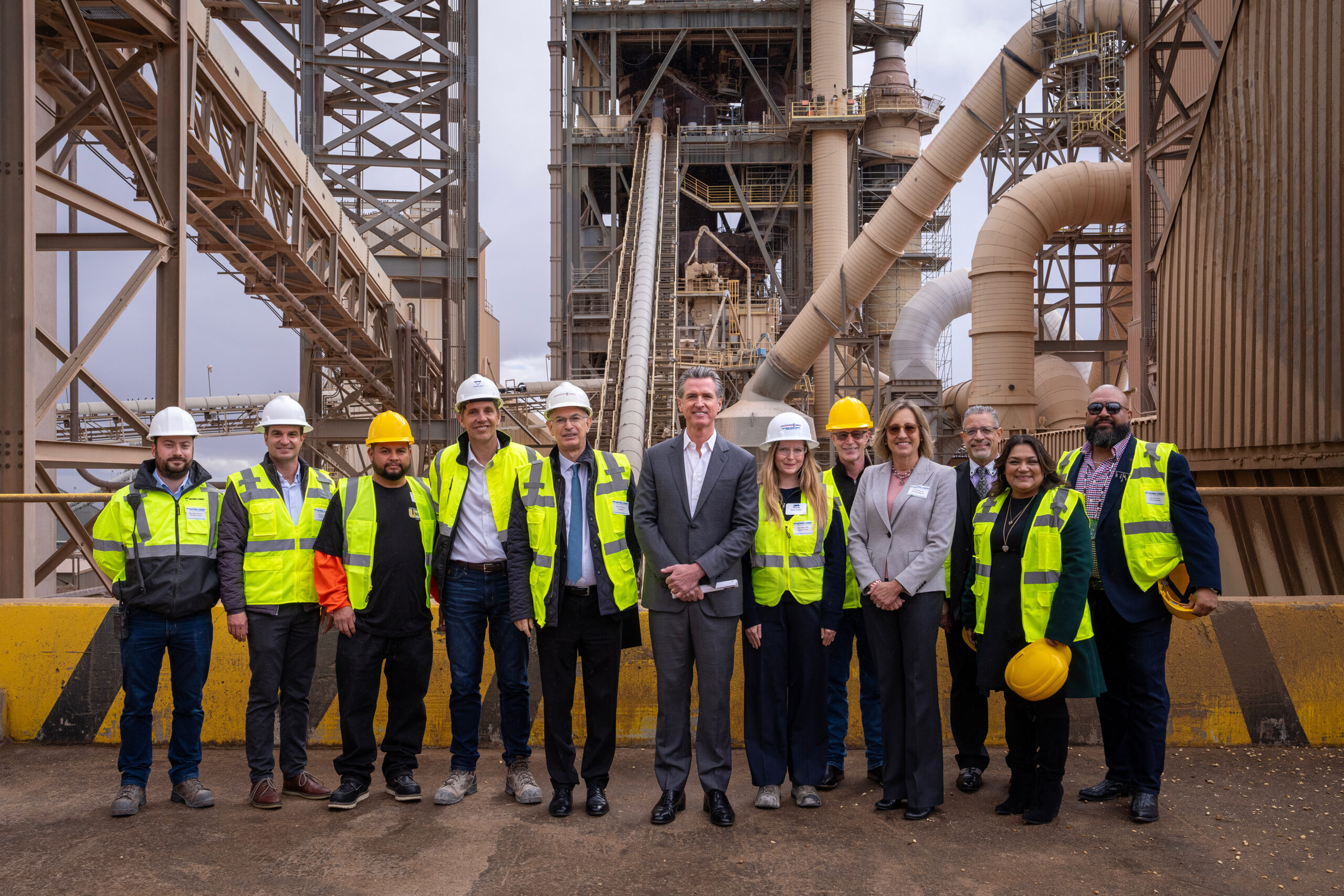
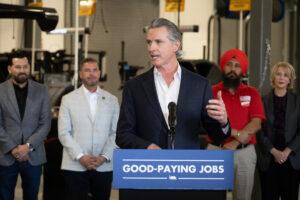
​KERN COUNTY – Following last week’s launch of a new economic framework that will help create more jobs, faster, Governor Gavin Newsom visited a sustainable, low-emissions cement plant in Lebec today to highlight job-creating efforts in Kern County.

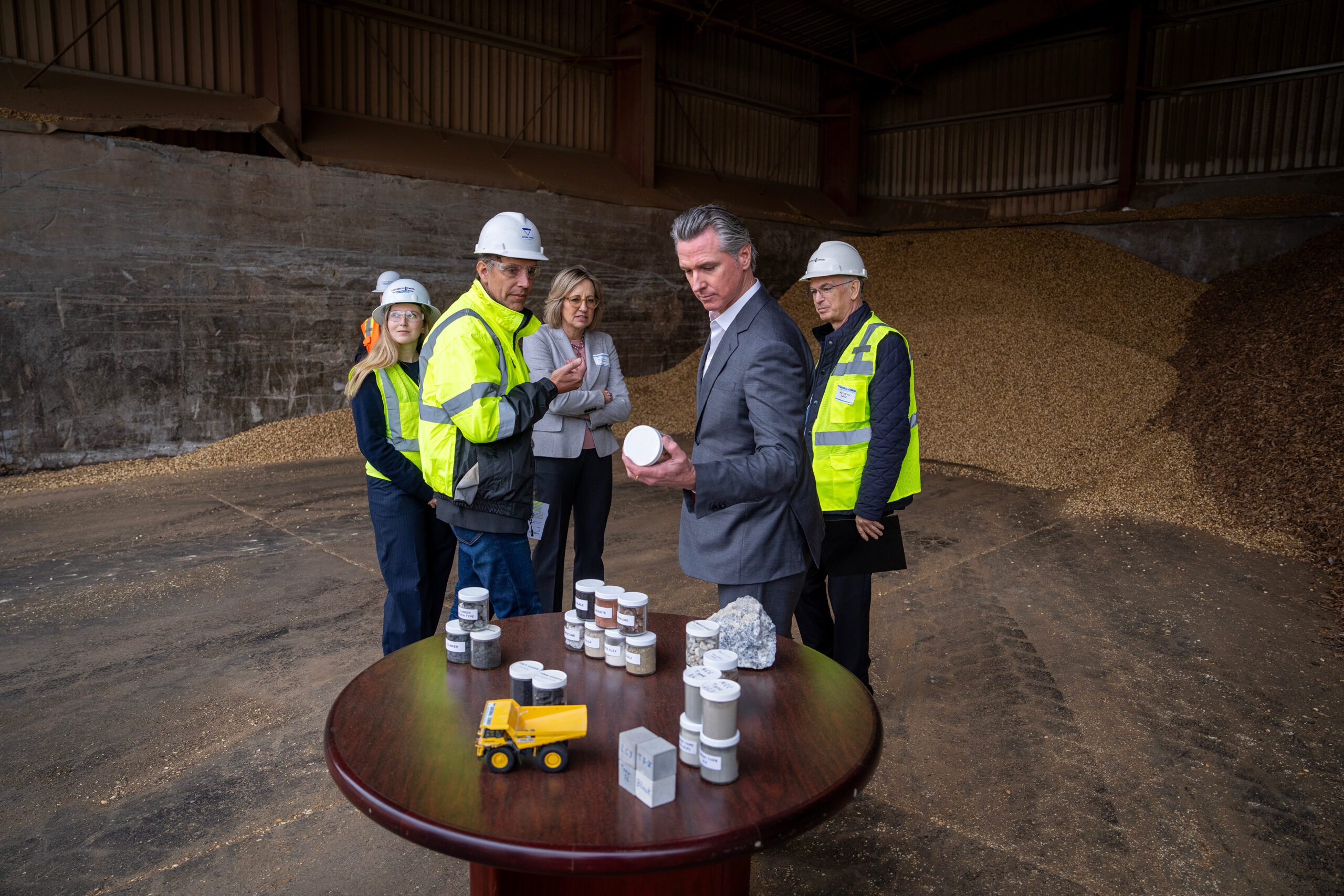
At National Cement, Governor Newsom toured the low-emissions plant and met with union workers and local leaders. Producing cement is known as one of the hardest industries to decarbonize, because of the heat it takes to make cement and because of the specific chemical processes involved. National Cement has worked to pivot to low-emissions operations and more sustainable cement mixes. The plant is on track to become one of the first fully decarbonized cement plants in the nation.

While at the plant, the Governor met with the Kern County Jobs First Collaborative to hear more about local economic priorities and how the region plans to continue advancing initiatives to create more good-paying jobs in climate-forward industries.

“Last week, I visited Fresno and now I’m here in Kern County because California’s economy only thrives when all our regions thrive. With these California Jobs First regional plans, we’re hearing directly from communities across our state about their economic priorities and their visions for the future. We’re doubling down and building a clean economy that will help power California for generations to come.”

Governor Gavin Newsom

The framework for the California Jobs First Economic Blueprint unveiled last week in Fresno aims to advance the state’s robust clean economy, which reaches nearly every region in the state. The clean economy spans multiple sectors such as onshore wind, solar, and carbon management – all priority sectors in the Kern County regional plan. National Cement’s Lebec plant will also be an important part of Kern County’s clean economy in the coming years as it continues to decarbonize its operations and pursues plans to expand into carbon capture.

Key to the state’s clean economy is the clean energy sector. California now has 7 times more clean energy jobs than fossil fuel jobs – and continues to be home to the most clean energy jobs in the nation. With more than a half-million clean energy jobs in the state – twice as many as the next state, Texas – Governor Newsom is doubling down on efforts to create even more of these climate-forward jobs.

Key to the state’s clean economy is the clean energy sector. California now has 7 times more clean energy jobs than fossil fuel jobs – and continues to be home to the most clean energy jobs in the nation. With more than a half-million clean energy jobs in the state – twice as many as the next state, Texas – Governor Newsom is doubling down on efforts to create even more of these climate-forward jobs.

About GO-Biz
The Governor’s Office of Business and Economic Development (GO-Biz) serves as the State of California’s leader for job growth and economic development efforts. GO-Biz offers a range of services to business owners including: attraction, retention and expansion services, site selection, permit streamlining, clearing of regulatory hurdles, small business assistance, international trade development, assistance with state government, and much more. For more information visit the GO-Biz website.

Willie Rudman
Deputy Director of Communications
Email, HERE

Stay Connected

LinkedIn

X

YouTube

Sign Up for our Newsletter

Governor Newsom unveils new economic framework to help create more jobs, faster

Governor Newsom unveils new economic framework to help create more jobs, faster

Governor Newsom unveils new economic framework to help create more jobs, faster

The California Jobs First Economic Blueprint will guide the state’s investments in key sectors to drive sustainable economic growth, innovation, and access to good-paying jobs over the next decade. The complete Economic Blueprint will be released early next year, along with $120 million to support “ready-to-go” job-creating projects statewide within the next three years.


FRESNO — Alongside community leaders, local officials and business owners from the Central San Joaquin region, Governor Gavin Newsom today unveiled the framework for the forthcoming California Jobs First Economic Blueprint – a first-of-its kind, bottom-up strategy for creating good-paying jobs and regional economic development.

Made up of ten key industry sectors, this framework will help streamline the state’s economic, business, and workforce development programs to create more jobs, faster, as part of the California Jobs First initiative. The state’s thirteen economic regions engaged more than 10,000 local residents and experts who collectively identified these sectors as key to driving local economies into the future.

“Each region of California has its own strengths — we’re helping build out each local economy with a bottom-up approach that’ll connect more good-paying jobs with California families. From agriculture to clean energy to manufacturing and everything in between, these blueprints will foster growth and expansion throughout every community of California.”

Governor Gavin Newsom

Gavin Newsom with auto mechanic

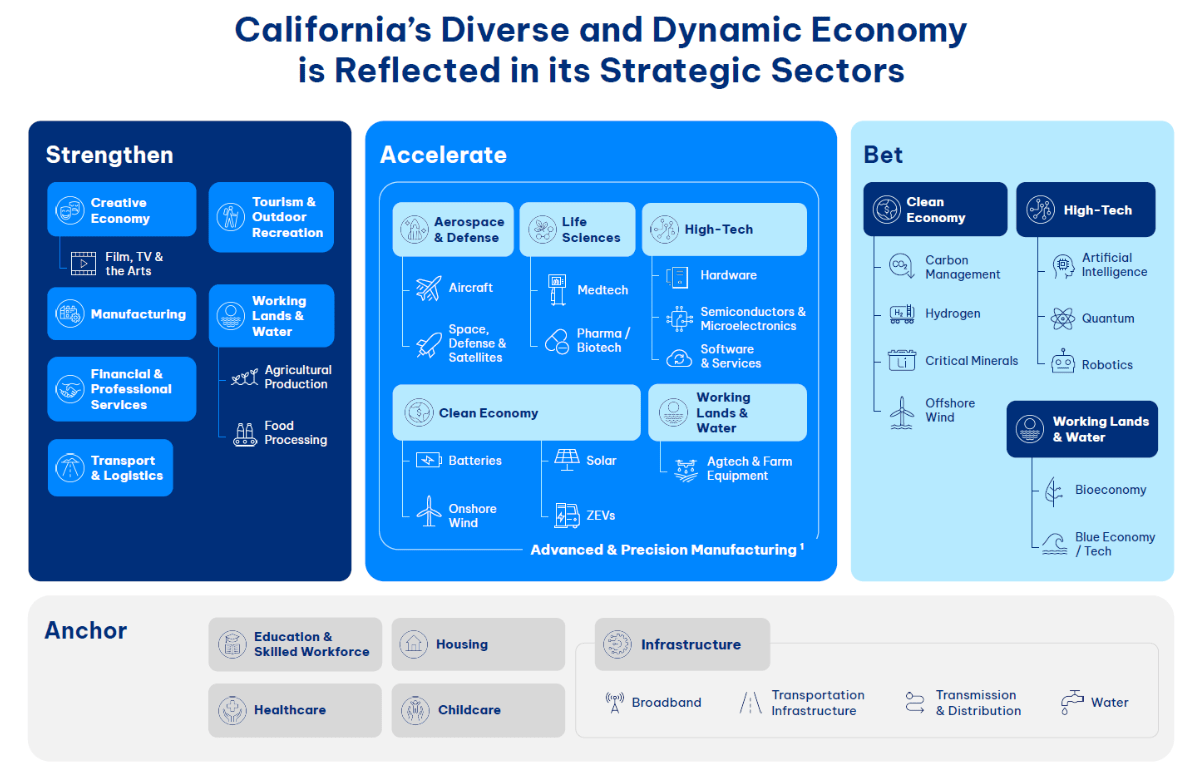
California’s economy has industries at all stages. They are categorized as follows within the Economic Blueprint:

  • Strengthen: Tradable sectors where California has an established competitive position and/or significant employment, but where there is leveling growth or wages
  • Accelerate: Tradable sectors with moderate to high projected growth that are ready for expansion, where additional investments (e.g., capital, infrastructure) could “bend the curve” to generate growth
  • Bet: Emerging tradable sectors with significant investment or high strategic importance to the innovation ecosystem
  • Anchor: Foundational local sectors that are critical for attracting and supporting industry and community activities
    The California Jobs First Economic Blueprint will highlight the ways in which workforce development can help Californians, particularly the most uninvested in communities, in meeting the specific skillset needs of the State’s and our regions’ priority industry sectors.

California's Diverse and Dynamic Economy is Reflected in its Strategic Sectors - info-graphicclick to enlarge graphic

“Today is another critically important milestone in aligning strategic investments that further economic growth and job creation in every region of California,” said Dee Dee Myers, Senior Advisor to Governor Newsom and Director of the Governor’s Office of Business & Economic Development. “This new economic framework will set the foundation for sustainable and inclusive growth, ensuring that the industries of today and tomorrow provide the good-paying jobs Californians deserve.”

Gavin Newsom speaking

The complete Economic Blueprint will be released early next year, along with $120 million over three years in competitive funding to support “ready-to-go” job-creating projects aligned to state priority sectors, ensuring that every region across California continues to play a critical role in the sustainable growth of the world’s fifth largest economy.

“Governor Newsom has driven an unprecedented $4 billion of state investment in training people for good jobs, and California continues to lead the nation in education, apprenticeship and earn-and-learn programs,” said Stewart Knox, Secretary of the Labor and Workforce Development Agency. “Having a well-prepared workforce is a crucial part of ensuring that our state has a healthy economy for decades to come.”

How we got here

  • In 2021, Governor Newsom launched a statewide economic development planning process called the Community Economic Resilience Fund (CERF), which was later renamed the Regional Investment Initiative under the banner of California Jobs First in 2023. The objective was to create high-quality, accessible jobs and sustainable economic growth across the state’s 13 regions.
  • Each region created a planning body – or collaborative – with representation from a wide variety of community partners including labor, business, local government, education, environmental justice, community organizations and more. The collaboratives then wrote their own data-driven, community-led economic plans, including identifying priority sectors.
  • To support this process, California has invested $287 million since 2022, including $5 million per region for planning, $39 million for pilot projects across the state and $14 million per region to develop viable projects that advance their strategic sectors.
  • In March, Governor Newsom announced the creation of the California Jobs First Council, made up of nine Cabinet-level agencies, focused on streamlining the state’s economic and workforce development programs to create more jobs, faster.

What local leaders are saying

Melissa James, President & CEO, REACH (Central Coast region): “People have been at the heart of the California Jobs First process, where broad, inclusive outreach has allowed local residents across the state’s 13 regions to design strategies and projects that uplift their economies. This historic, people-first investment infuses real resources into the economy to uplift both people and communities, ensuring growth and opportunity are shared across the state.”

Manpreet Kaur, Project Director, Kern County Coalition (Kern County region): “A rich history of labor movements was born right out of Kern County, with incredible leaders like Cesar Chavez and Dolores Huerta and yet, we haven’t always had the opportunity to come together as one community and develop the roadmap for the future of our workers and our community. California Jobs First set the table for all of us, as one Kern County, to sit together and do the hard work, ensuring all people in our region can access quality jobs into the future.”

Karen Warner, CEO, Beam Circular (North San Joaquin region): “California is home to the industries and innovators that are shaping the materials, food, energy, and products that we use every day. California Jobs First will help us make big bets on the industries of the future that will deliver quality jobs, a healthy environment, and new pathways to prosperity in local communities across every region of the state.”

About GO-Biz
The Governor’s Office of Business and Economic Development (GO-Biz) serves as the State of California’s leader for job growth and economic development efforts. GO-Biz offers a range of services to business owners including: attraction, retention and expansion services, site selection, permit streamlining, clearing of regulatory hurdles, small business assistance, international trade development, assistance with state government, and much more. For more information visit the GO-Biz website.

Willie Rudman
Deputy Director of Communications
Email, HERE

Stay Connected

LinkedIn

X

YouTube

Sign Up for our Newsletter

Building on long history of tech & innovation, California selected as headquarters for the National Semiconductor Technology Center

Building on long history of tech & innovation, California selected as headquarters for the National Semiconductor Technology Center

Building on long history of tech & innovation, California selected as headquarters for the National Semiconductor Technology Center

First-of-its kind facility is key pillar of CHIPS for America effort to boost U.S. semiconductor leadership around the world

Sacramento, CA – California has been selected as the CHIPS for America Design and Collaboration Facility (DCF), as announced today by the U.S. Department of Commerce (Commerce) and Natcast, the operator of the National Semiconductor Technology Center (NSTC). The DCF will be one of three CHIPS for America research and design (R&D) facilities and will also operate as the headquarters for the NTSC and Natcast.

“California has built a world-class innovation economy and has been at the forefront of the semiconductor industry for decades,” said Senator Alex Padilla. “Establishing the NSTC headquarters and design hub in California will capitalize on our state’s unparalleled assets to grow a highly skilled workforce and develop next-generation advancements. This CHIPS Act funding will propel emerging technologies and protect America’s global semiconductor leadership, all while bringing good-paying jobs to our state.”

“With the enactment of our CHIPS and Science Law, America declared our economic independence: powering a manufacturing boom, driving decades of scientific discovery and creating good-paying jobs across the country,” Speaker Emerita Nancy Pelosi said.  “With California designated for the next CHIPS for America research and development flagship facility, the Golden State will lead the way with innovative technologies that will lower costs for America’s working families.  The research and development section of the CHIPS and Science Law came from the Science, Space and Technology Committee, on which Congresswoman Zoe Lofgren is now the top Democrat.  Under the visionary leadership of the Biden-Harris Administration, America’s beacon of excellence in science, innovation and inclusivity will glow for generations to come.”

The DCF is expected to drive more than $1 billion in research funding and create more than 200 direct jobs over the next 10 years. It will serve as the center for advanced semiconductor research in chip design, electronic design automation, chip and system architecture, and hardware security and will be integral to the country’s semiconductor workforce development efforts.

“We are thrilled that the Department of Commerce and Natcast chose to locate this critically important facility in Sunnyvale, the heart of the Silicon Valley, alongside the world’s largest concentration of semiconductor businesses, talent, intellectual property, and investment activity,” said Dee Dee Myers, Senior Economic Advisor to Governor Newsom and Director of the Governor’s Office of Business and Economic Development (GO-Biz). “The Newsom Administration and our partners across the industry know how important it is to shorten the timeframe from R&D to commercialization. We are looking forward to a productive partnership with the Department of Commerce and Natcast to ensure that CHIPS for America will be an enduring success not only for our state but for the entire country.”

The DCF will convene semiconductor industry leaders from across the U.S., offering unparalleled engagement and collaboration opportunities to a diverse array of stakeholders throughout the semiconductor value chain, and will administer the NSTC Design Enablement Gateway, helping drive technological advances in semiconductor design and manufacturing to transfer at scale. The facility will also support NSTC Workforce Center of Excellence programs and initiatives to build and sustain the diverse and skilled workforce necessary for the U.S semiconductor industry to grow. With the largest public higher education system in the U.S., world-class research institutions like UC Berkeley and Stanford, and surrounding national labs, California’s unmatched talent pipeline will foster a dynamic workforce that advances the DCF mission.

“California continues to be a global leader in innovation and entrepreneurship, translating fundamental research discoveries into foundational technologies,” said Theresa Maldonado, Ph.D., P.E., Vice President for Research and Innovation at the University of California Office of the President. “The University of California is committed to working hand-in-hand with Natcast and the DCF on next generation semiconductor research and workforce development to ensure the U.S. remains a world leader in this field.”

As outlined in the recently released NSTC Strategic Plan, the DCF will lower the barriers to semiconductor prototyping, experimentation, and other R&D activities that will support America’s global strength and leadership in design, materials, and process innovation while enabling a vibrant domestic industry.

To read the full press release from the U.S. Department of Commerce, visit here. To learn more about the benefits of NSTC Membership and to join, visit natcast.org/nstcmembership.

About GO-Biz
The Governor’s Office of Business and Economic Development (GO-Biz) serves as the State of California’s leader for job growth and economic development efforts. GO-Biz offers a range of services to business owners including: attraction, retention and expansion services, site selection, permit streamlining, clearing of regulatory hurdles, small business assistance, international trade development, assistance with state government, and much more. For more information visit the GO-Biz website.

Willie Rudman
Deputy Director of Communications
Email, HERE

Stay Connected

LinkedIn

X

YouTube

Sign Up for our Newsletter