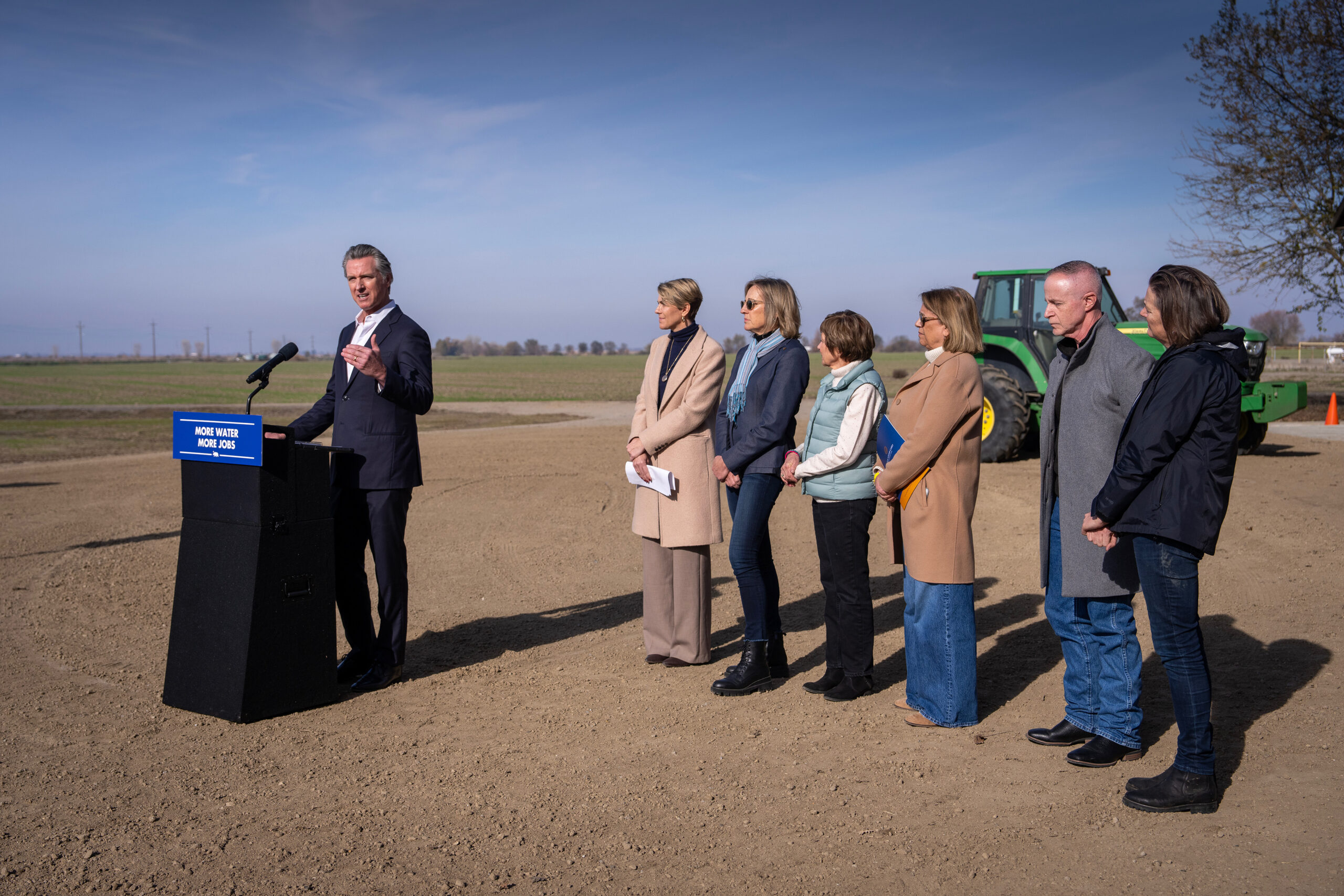
Otay Mesa, CA — Governor Gavin Newsom today announced a new effort to help spur economic development and increase trade between California and Mexico by starting construction that will facilitate the opening of a new Otay Mesa East Port of Entry in the San Diego region of California’s southern border.
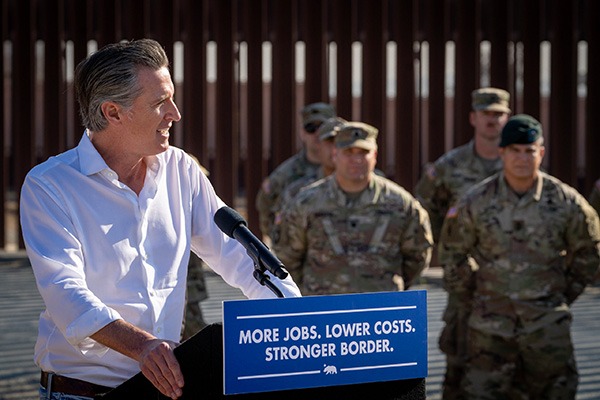
In addition, Governor Newsom announced a new strategic initiative by the California National Guard (CalGuard) to enhance border security — building on the state’s fight to curb the flow of fentanyl by targeting the guns and cash that flow south and further fuel cartel profits and violence, one underlying driver of people migrating.
“This new port-of-entry will strengthen California’s world-leading economy, create jobs, and support regional communities through trade. At the same time, we’re further stepping up border security with a new CalGuard initiative targeting the cash and weapons that fuel cartel violence, complementing our successful efforts to block fentanyl from entering our state. California is proving that we can build strong international partnerships with Mexico — our top trading partner — to grow our economy and create jobs while prioritizing the safety and well-being of our communities.”
Governor Gavin Newsom
“The new Otay Mesa East Port of Entry is an example of the strong partnership between the Biden-Harris Administration, the Government of Mexico, and the State of California to enhance our international trade and economic vitality, while ensuring our border security.”
U.S. Secretary of Homeland Security Alejandro N. Mayorkas
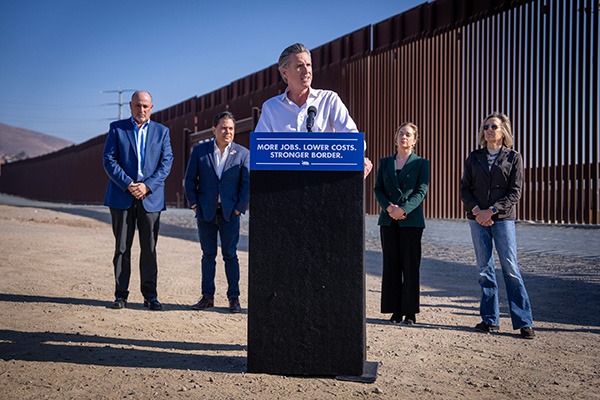
“It is vital that we support critical projects such as the Otay Mesa East Land Port of Entry and we look forward to continued partnership with Governor Newsom and his team to advance economic prosperity and create jobs in our region,” said Jerry Sanders, President & CEO of the San Diego Regional Chamber of Commerce.
Why this matters
The new port-of-entry will help alleviate delays at ports of entry along the southern border and speed up the flow of commercial goods that contribute to the ongoing success of California’s thriving economy. California’s strategic relationship with Mexico not only helps drive the state’s long-term economic success but brings a new law enforcement partnership that will foster a strong mutual effort to protect public safety and secure the border. Trade between California and Mexico through our land ports of entry was valued at more than $88 billion last year. It is estimated that delays at the California-Baja ports of entry substantially impact the U.S. and Mexican economies, including a loss of $3.4 billion in economic output and 88,000 jobs, according to the most recently available data.
In the ‘California Jobs First’ plan for the Southern Border Coalition, the region highlights its strategic geopolitical position, noting its unique location along the U.S.–Mexico border offers advantages in terms of trade and cross-border relations fostering economic development.

“The California-Baja California region is the epicenter for the exchange of culture and commerce for California, the U.S. and Mexico,” said California State Transportation Agency Secretary Toks Omishakin. “Improving goods movement capacity at the border will provide immediate economic benefits and reduce air pollution for the entire Tijuana-San Diego region and beyond.”
“The California National Guard continues to stand as trailblazers in the fight against fentanyl,” said Major General Matthew Beevers, Adjutant General of CalGuard. “Our interagency partnerships and support to law enforcement aims to protect our communities and disrupt transnational criminal organizations activity.”
How this helps Californians
The new Otay Mesa East Port of Entry will boost California’s economy by helping American businesses sell their goods to Mexico more efficiently, creating jobs, and lowering costs for California consumers — all while the Governor’s new CalGuard initiative enhances public safety by targeting the flow of guns, cash, and drugs that fuel cartel violence.
Boosting California’s economy
Mexico is California’s top export market, purchasing $33.3 billion worth of California products annually. Mexico is also California’s second-largest source of imports — totaling $61.5 billion worth of goods annually.
Nationally, in 2023, Mexico surpassed China as the main source of imports for the United States. It is currently the United States’ largest overall trade partner. According to the Wilson Center, nearly five million jobs in the United States are dependent on trade with Mexico.
Investing in infrastructure across the state
The new port of entry at Otay Mesa is part of the Governor’s build more, faster agenda, delivering infrastructure upgrades across the state. California has invested $480 million to prepare for the completion of the Otay Mesa East Port of Entry because of the tremendous economic benefits to the state and local communities, and an additional $140 million from a TCEP grant.
Today’s announcement initiates California’s efforts to build a new road to the port of entry — allowing this project to move as quickly as possible.
Once completed, this port of entry will relieve congestion. Currently, cars and trucks can idle at the U.S.-Mexico border for more than 3 hours. This wastes time and money and increases pollution affecting local communities. This new crossing has the potential to cut wait times in half at all nearby entry points. Find more projects in your community and track progress at build.ca.gov.
Safeguarding California’s southern border
Governor Newsom has increased resources to protect public safety, stop drug trafficking, and ensure criminals are held accountable throughout California.
In June, Governor Newsom increased deployment of CalGuard’s Counterdrug Task Force by more than doubling the number of service members interdicting fentanyl and other drugs statewide, including at California ports of entry, from 155 to nearly 400. In 2023 alone, the California National Guard’s Counterdrug Task Force seized 62,224 lbs of illegal fentanyl statewide, including at the Ports of Entry. Fentanyl is primarily smuggled into the country by U.S. citizens through ports of entry.
Today’s announcement will build upon and bolster these successes. Combined with existing initiatives to prevent illegal narcotics from being smuggled into California, CalGuard will broaden its support to federal agencies by adding criminal analysts from the Guard to state and federal counter-drug task forces, with a specific focus on targeting the flow of firearms and money from the U.S. into Mexico and beyond — which funds cartel-linked crime in the United States.
Data from the U.S. Bureau of Alcohol, Tobacco and Firearms indicate that of the 21,000 firearms recovered in Mexico between 2016 and 2022, nearly 70% had either been made or imported into the United States. A recent survey also shows that 48% of migrants who immigrated to the United States reported previously experiencing gun-related threats and violence. With CalGuard focusing on stopping the flow of illegal goods, U.S. Customs and Border Protection agents have additional bandwidth to identify cars and trucks potentially trafficking illegal items.
Additionally, the Governor directed the state of California to submit an application with the U.S. Department of State to facilitate a military partnership between the CalGuard and Mexico under the federal State Partnership Program, to strengthen the already robust ties between California and Mexico — enhancing security cooperation and economic prosperity across North America. The CalGuard’s vast experience supporting civil authorities in counter-narcotics, emergency response, and disaster relief operations is unmatched, and would mirror the existing partnership between the CalGuard and Ukraine that proved invaluable support during the onset of Russia’s most recent invasion in 2022.
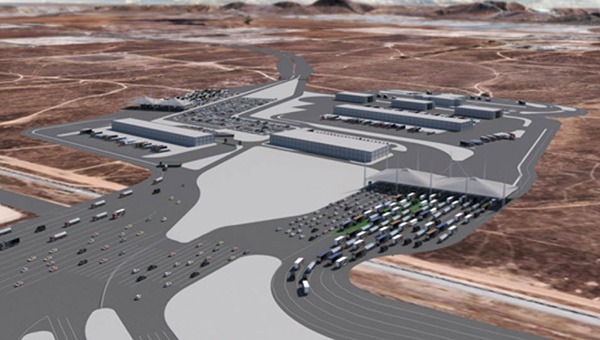
Rendering of how the finished port-of-entry will likely look
About California ports of entry
There are 7.4 million annual northbound border crossings via commercial truck, of which 1.6 million (21.2%) pass through ports of entry on the California-Mexico border. The Otay Mesa Port of Entry received over 1 million inbound trucks in 2023, accounting for 14.1% of trucks crossing from Mexico to the U.S. The only other U.S.-Mexico border crossing with higher volumes of inbound truck traffic is Laredo, Texas, with over 2.9 million incoming trucks (39.9%) in 2023. Learn more about this port of entry.
Bigger picture
This effort builds on ongoing conversations between Governor Newsom and high-ranking Mexican officials and senior Biden-Harris Administration officials. Earlier this year, Governor Newsom attended the inauguration of Mexico’s President Claudia Sheinbaum and met with Baja Governor Marina del Pilar Ávila Olmeda. And last month, Governor Newsom held meetings in Washington, D.C. with top Biden-Harris Administration officials advocating for a handful of key priorities.